
Alphanumeric Sender ID in GoHighLevel: What It Is and Why It Isn't Available Yet
alphanumeric sender id gohighlevel 8 min read
What an alphanumeric sender ID is, why it never works for US texting, where it does (like the UK), and what HighLevel and Phone Clover offer instead today.
- Best for
- Agencies with UK or other international clients who want texts to arrive from the business name instead of a phone number, and need to know what is possible in HighLevel today.
- Not for
- Anyone texting US or Canadian customers. Carriers there do not accept alphanumeric senders at all, on any platform.
- The difference
- Phone Clover does not send from an alphanumeric sender ID today. It gets you a real, two-way number in the country you need, bought from your own Telnyx account.
You text a UK customer from HighLevel and it arrives from a string of digits they don’t recognize. What you wanted was the sender line to read your client’s business name, the way their bank’s texts do. That feature is called an alphanumeric sender ID, and requests for it on HighLevel’s ideas board go back to 2020.
This guide explains what an alphanumeric sender ID is, why it will never work for US texting, where it does work, what HighLevel offers today and what Phone Clover does and does not do. Short version: it is a real and useful thing outside North America, it is one-way, Phone Clover doesn’t offer it, and we couldn’t confirm a way to set one up in HighLevel today.
What an alphanumeric sender ID is
An alphanumeric sender ID is a name used as the “from” on a text message instead of a phone number. Telnyx describes it as a way to “set your company name or brand as the Sender ID when sending one-way SMS messages to international destinations.”
The basic rules are the same across carriers:
- Up to 11 characters. Letters, digits and spaces are allowed. Telnyx’s help center gives a minimum of 3 characters, while its developer docs say 1, so plan on 3 to 11 to be safe.
- Not only numbers. It has to contain at least one letter, so
ACMEPLUMBworks and12345does not. - One-way. Nobody can reply to a name. The message arrives, and the conversation ends there.
That last point matters more than it sounds, and we come back to it below.
Why it never works for US and Canadian texting
This part isn’t up to HighLevel, Twilio, Telnyx or Phone Clover. Telnyx’s support article says it directly: “alphanumeric is not supported by the carriers in the US or Canada.” Twilio’s documentation says the same thing, and Telnyx’s developer docs add Puerto Rico to the list.
US business texting is built around numbers. Application-to-person texts to US mobile phones go out from one of three registered sender types:
| Sender type | How it gets approved | Replies |
|---|---|---|
| 10DLC local number | Brand and campaign registration (A2P 10DLC) | Yes |
| Toll-free number | Toll-free verification | Yes |
| Short code | Its own application and carrier approval | Yes |
Telnyx puts it simply: “10DLC is required for A2P messaging to US mobile numbers.” The registration is tied to the number, which is how carriers know who is sending. A name has no registration behind it in that system, so carriers don’t accept it.
If most of your contacts are in the US, the useful work is on the registration side: see why a GoHighLevel 10DLC campaign gets rejected and what to expect from toll-free verification.
Where it does work: the UK and other countries
Outside North America, many countries accept alphanumeric senders, usually for one-way messages such as reminders and alerts. The rules vary by country, and they change.
The UK. Telnyx’s UK guidelines say alphanumeric sender IDs “are supported and will be maintained, no registration is required.” There is one exception. The UK’s SMS SenderID Protection Registry, run by the Mobile Ecosystem Forum, lets organizations register the sender names they use so fraudsters can’t impersonate them. Only authorized senders can use a protected name, and Telnyx says a letter of authorization is required for approval.
Countries that need pre-registration. Telnyx notes that “in some cases your Sender ID will need to be pre-registered before use.” The UAE is one example: its guidelines require registration with a signed form on company letterhead.
Countries that overwrite it. In some countries the carrier replaces your name with a number “to ensure delivery.” Telnyx’s country table, as of September 2026, lists Argentina, Belgium, Brazil, Chile, China, Colombia, Mexico, New Zealand, South Africa and Taiwan among them. Your client sends as “ACME” and the customer sees digits anyway.
Check the current rules for each country before you promise a client anything. Carrier policies move faster than blog posts, including this one.
Is it available in HighLevel today?
We couldn’t confirm that it is. The public evidence points both ways:
- Open feature requests. A request on HighLevel’s ideas board for alphanumeric sender ID has been open since 2020, and a separate UK request posted in March 2025 is open too, with no staff reply on either when we checked in September 2026.
- A lapsed promise. When HighLevel announced in July 2024 that UK texts from international long codes would be blocked, its changelog added: “We plan to support Alphanumeric SenderID and Short-codes in the next 6/9 months.” That window has passed.
- A contradicting help article. One HighLevel error-code article, updated in September 2026, says that where a country supports it, “you can configure one in HighLevel.” HighLevel’s UK compliance guide also lists alphanumeric sender ID as a UK sender option. Neither page explains how, and we found no setup guide.
So the honest answer is: look in your own account’s phone number settings before you assume either way, and ask HighLevel support if the option isn’t there. People on the ideas board point to other apps as a workaround. We don’t compare named apps here.
The one-way trade-off
Even where it works, an alphanumeric sender changes how texting behaves, and it doesn’t fit everything you do in HighLevel.
- No replies. HighLevel’s own documentation says “recipients cannot reply to messages sent from an alphanumeric ID.” Conversations in HighLevel are two-way. A customer who wants to answer your appointment reminder has nowhere to send the answer.
- No STOP by text. Opting out by replying STOP can’t work either. Twilio’s guidance is that you “must provide other instructions”, such as a support email, a phone line or a separate number to text, so people can opt out. Build that into every message.
- You can’t text it back. HighLevel’s error dictionary notes that alphanumeric senders “cannot receive messages from Lead Connector numbers.”
Marketing is where this bites hardest. A sender name doesn’t change the consent rules: you still need permission to text people and a working way for them to stop, and with a name as the sender that way has to live inside the message itself. In practice, teams that use alphanumeric senders pair them with a real number: the name for reminders and alerts, and a local number for anything that needs a reply.
What Phone Clover does and does not do
Phone Clover is a private HighLevel app in early access. It connects your own Telnyx account, so the numbers live on Telnyx instead of LC Phone’s Twilio. Calling and texting through HighLevel on those numbers are in early access, as explained below.
What it does not do:
- It does not send from an alphanumeric sender ID. Where Phone Clover sends texts, they go out from numbers on your Telnyx account.
- It isn’t self-serve. Alphanumeric sender ID, porting and short codes are not available as steps in the app. The Get a number screen offers an email link if you want to ask us about them. That is a request, not a promise.
What it does do, which is often what the person asking for a sender name actually needs:
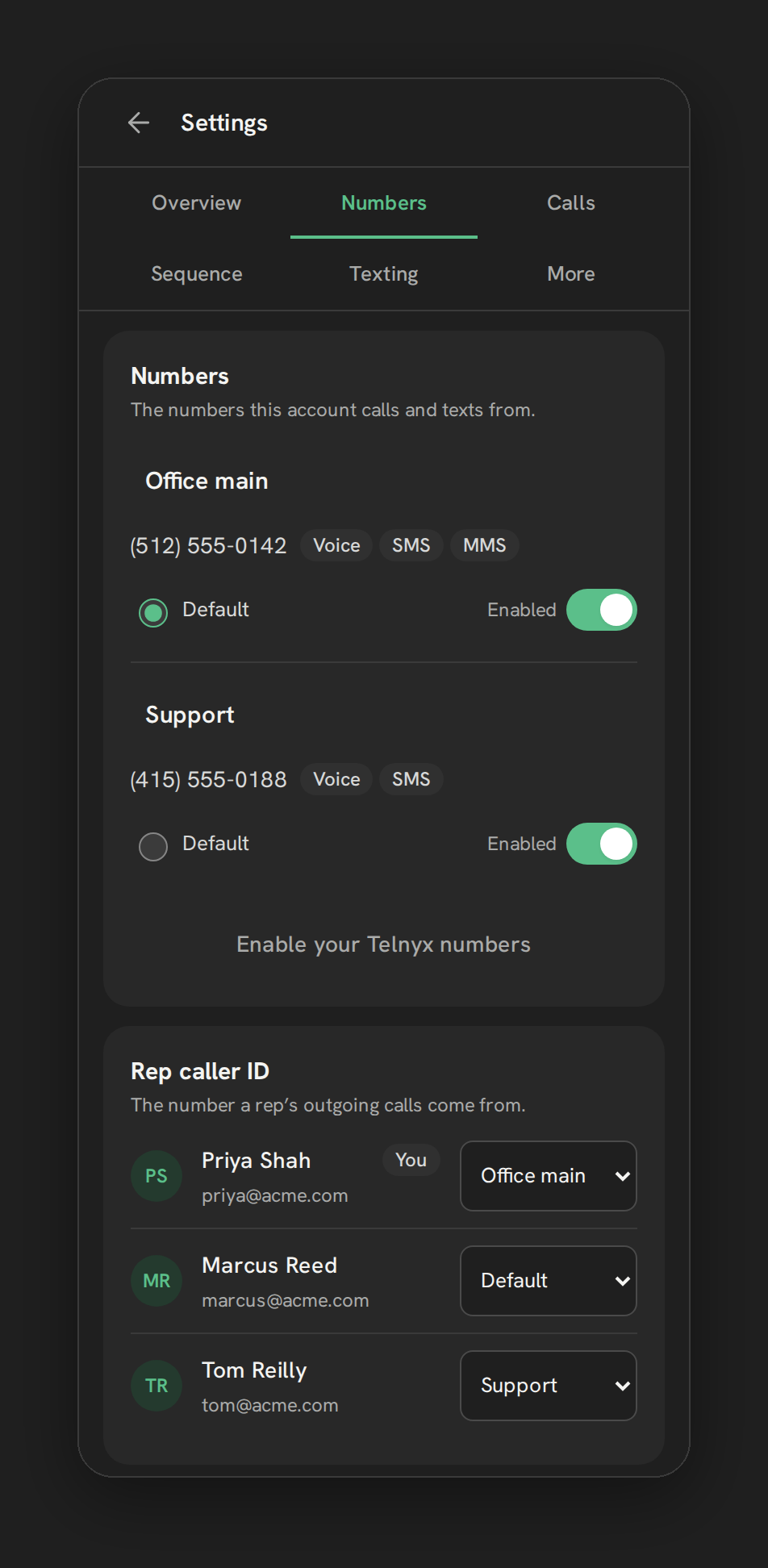
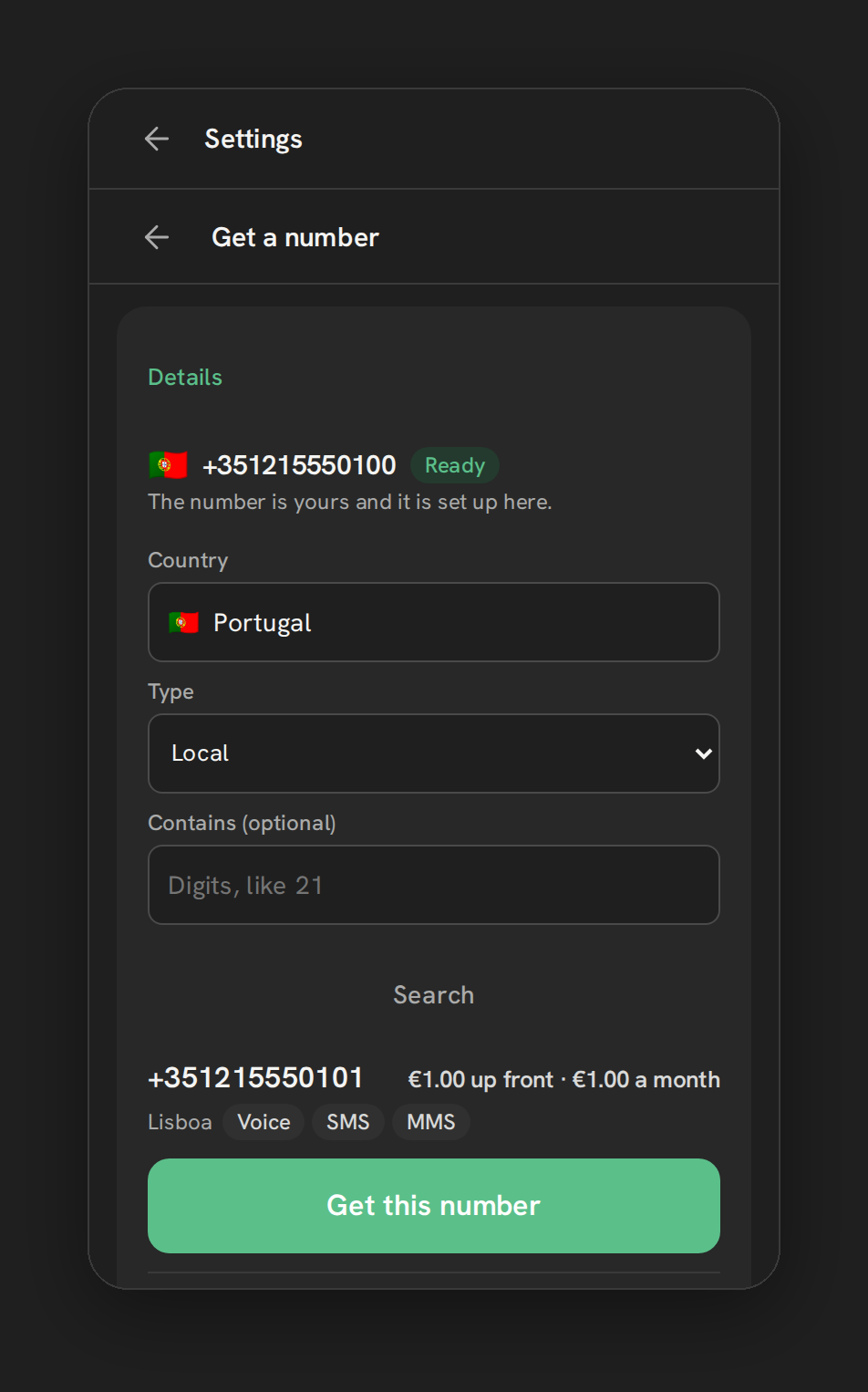
- A real number in the country you need. The Get a number screen, under Settings, then Numbers, then Add a number, searches Telnyx’s inventory by country and type (local, mobile, toll-free, national or shared cost), shows the price, and collects any paperwork a country requires before the purchase goes through. That part is ready for every early-access account. See international numbers in GoHighLevel for which countries work and what the paperwork looks like.
- A number customers can reply to. A real number can take replies, which an alphanumeric sender never can. The honest limit: texting through HighLevel’s own Conversations on Telnyx runs in our pilot account today (early access). Workflow and bulk texting are not proven yet, and 10DLC registration on the pilot is still to come, so we don’t promise volume sending.
For how the pieces fit together, see the native SMS provider and number management pages, or the full Telnyx for GoHighLevel guide.
What to use instead today
Pick based on where the customers are and whether you need replies.
| Situation | What works today |
|---|---|
| US or Canadian customers | A registered 10DLC number or a verified toll-free number. No alphanumeric option exists. |
| UK customers, conversations and replies | A UK long code. HighLevel’s UK guide says every UK long code must be tied to an approved regulatory compliance bundle, and Telnyx asks for identity and address documents for UK numbers. |
| UK customers, one-way reminders only | An alphanumeric sender would fit, if your platform offers one. Check your HighLevel account; Phone Clover doesn’t send from one. |
| A country that overwrites sender names | A local number. Your name would be replaced anyway. |
| You already have a US landline or VoIP number customers know | Keep it and add texting with Hosted SMS. US numbers only, not mobile numbers. |
One UK rule applies whichever route you choose: since July 30, 2024, texts sent to UK phones from international long codes are blocked. Under that rule, texts from a US number to UK customers are blocked, and HighLevel documents that these sends can fail with error 21612.
A short checklist before you promise a client a sender name
- Where are the recipients? If they are in the US or Canada, stop here: use a registered number.
- Does the country keep sender names? Check the carrier’s current country rules. If it overwrites them, a local number is the better spend.
- Is the name protected? In the UK, a protected brand needs a letter of authorization.
- Do customers need to reply? If yes, you need a real number anyway, and the name is an extra.
- How will people opt out? Put a link or a number they can text in every one-way message.
- Is it actually available in your account? Check the phone settings in HighLevel, or ask support, before you quote it.
Where this leaves you
An alphanumeric sender ID is a good tool for one-way messages in countries that allow it. It will never work for US texting, it can’t take replies, and HighLevel’s own pages disagree about whether you can set one up there today. Phone Clover doesn’t offer it either. What it offers is the part most agencies end up needing anyway: a real, two-way number in the client’s country, on a Telnyx account you own.
If you are weighing LC Phone against a Telnyx setup for international clients, Phone Clover vs LC Phone lays out the differences, and Is there a Twilio alternative for GoHighLevel? covers why UK and EU pricing pushes people to look. For everything texting-related, start at Texting on Telnyx.